








▌ Arms · 118
Weapons
- ⚔️ChainsawLEG.
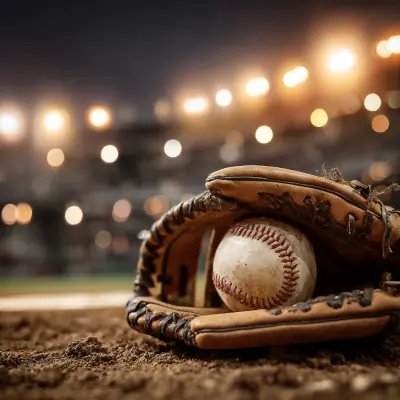
- ⚾Spiked batRARE
- 🧹BroomCOMMON
The first cases appeared at King's Cross St Pancras. Commuters stumbling off the Piccadilly line, grey-faced, collapsing on the platform before pulling themselves back up with a mechanical slowness, glassy eyes, slack jaw, fingers twitching like something that had forgotten how hands work. The Transport for London staff thought it was spice. They'd seen worse on the Northern line at two in the morning. Then the biting started.
Within two hours, the London Underground, the oldest metro system on earth, 272 stations, eleven lines, a network that had survived the Blitz and come out the other side with a stiff upper lip and a minor signalling delay, became a mass grave. The Central line turned into an abattoir on rails: packed carriages kept running, doors jammed shut, screams fading car by car, station by station. At Bank station, that labyrinth of tunnels where even healthy commuters get lost on a good day, thousands found themselves trapped between ticket barriers and the grey tide surging up from the platforms below. Mind the gap, the announcements still said. Mind the gap.
Above ground, London didn't understand straight away. On Regent Street, tourists were still pouring out of Hamleys with bags full of teddy bears when the first infected climbed out of the Tube ventilation shafts near Piccadilly Circus, stumbling into the evening light past the neon signs, past the statue of Eros that had watched over this circus for a hundred and thirty years and had never seen anything like this. People filmed. Of course they filmed. The footage of a man in a Savile Row suit biting a street performer dressed as Spider-Man outside Leicester Square went viral, thirty-seven million views before the internet collapsed. The street performer fought back with a plastic web-shooter. It didn't help.
The Prime Minister addressed the nation from Downing Street at 6:47 PM. By 7:15 PM, the black door of Number 10 was shut and no one was answering. By 8:02 PM, New Scotland Yard had gone dark. Larry the Cat was the last living resident of Downing Street. He would outlast them all.
The Army tried to hold the bridges. London is a city built on a river, and whoever controls the bridges controls the city, that had been true since the Romans. They barricaded Westminster Bridge, Waterloo Bridge, Tower Bridge. But London has thirty-five crossings over the Thames, and you cannot hold thirty-five bridges with soldiers who haven't slept and don't understand what they're shooting at. Lambeth Bridge fell first. Then Vauxhall. Then London Bridge, which had been falling down in nursery rhymes for centuries and finally did it for real.
The East End went fast. In Whitechapel, where Jack the Ripper had once stalked the fog and where the curry houses of Brick Lane still glowed amber in the dusk, the shutters came down too late. In Tower Hamlets, Bangladeshi families barricaded council flats with furniture and kitchen knives and held their stairwells for hours. In Hackney, the artisan coffee shops and vintage clothing stores of Broadway Market were overrun between the flat white and the oat milk latte. Nobody had time to post about it.
In Brixton, the market traders fought back with machetes and cricket bats. The community that had survived the riots, the gentrification, and decades of being told it was dangerous turned out to be the most dangerous thing in South London, but not dangerous enough. In Peckham, the last transmission from a pirate radio station was a DJ playing 'London Calling' by The Clash, turning the volume up until the signal cut to static.
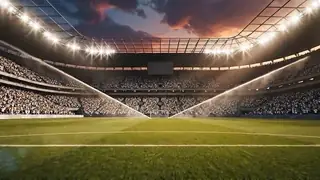
At Wembley, the ninety thousand empty seats caught the floodlights and held them. Shadows dragged across the pitch where England had won the World Cup in 1966, where Live Aid had played in 1985, where a million dreams had been scored and missed and saved. The arch above, that great white curve visible from twenty miles away, still glowed against the clouds like a question mark over a city that had run out of answers.
At the Tower of London, the ravens were gone. Legend says that if the ravens leave the Tower, the kingdom falls. Nobody had needed to clip their wings this time. They just left. The Crown Jewels sat behind glass in an empty room, glittering for nobody. A thousand years of monarchy, locked in a case, while outside the walls the kingdom did exactly what the legend said it would.
The London Eye still turned. Slowly, capsule by capsule, through a night that smelled of smoke and rain and something older. From the top, you could see it all: the fires in Croydon, the darkness spreading across Islington, the Thames reflecting nothing but black sky. The Houses of Parliament, that Gothic fever dream on the riverbank where democracy had been invented and then argued about for eight hundred years, still had its lights on. Big Ben, silenced for repairs years ago, had nothing left to count.
London. The city that had survived the Plague, the Fire, the Blitz, the IRA, and the Circle line at rush hour.
It did not survive Tuesday.
And in the dark, between the Georgian terraces and the council blocks, between the curry houses and the champagne bars, between the old money and the no money, nine million mouths were opening. Not to speak. Not to complain about the weather. Not to queue politely. To bite. To tear. To feed.
Nobody could say for certain where it started. Some blamed a dead fox in the tunnels beneath King's Cross, where the Victoria, Piccadilly, Northern, Metropolitan, Hammersmith and Circle lines converge like veins feeding a dying heart. Others pointed to a shipping container at Tilbury Docks that Border Force never got round to inspecting because of staff shortages, budget cuts, and a three-hour argument about whose jurisdiction it was. A few whispered about a research facility in Porton Down whose emergency line went dead on the night of March 12th and never came back. What everyone agrees on is that it happened on a Tuesday, right at rush hour. As if the thing had checked the timetable.
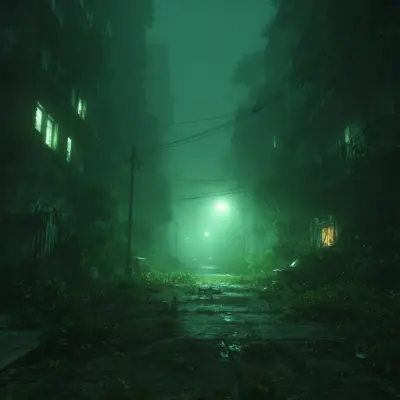
"As dusk fell, the Shard still pierced the fog above a city emptied of anything alive. Trafalgar Square, deserted, was littered with tourist brochures and a lone abandoned umbrella. And in the dark, it was hungry."
From the katana to Billy the puppet. From the battle tank to the garden gnome. Every survivor carries 3 items: choose well. Unlock new gear as you gain experience.
Meals become works of art. Team morale never drops below 60%.
Teams that still have some information about the old world last longer. Log in to activate the permanent bonus.
The crown commands respect even in the chaos. The leader radiates poise, nobody questions the orders.
▌ FROM 0 TO 1200+ · FROM "ZOMBIE FOOD" TO "GOD MODE"
Run the simulation. Discover your Survival Score. Share your team. Every decision matters. Every day brings you closer to GOD MODE, or to death.
▌ 5 transmissions to read before building your team