













▌ Arms · 118
Weapons
- ⚔️ChainsawLEG.
- ⚾Spiked batRARE
- 🧹BroomCOMMON
Noord Street taxi rank was where it announced itself. A queue jumper collapsed between two taxis, shaking, foaming. The marshals, the men with whistles who directed the organized chaos of a thousand minibuses, assumed it was nyaope. They'd seen a hundred addicts seize and fall in that rank. Two marshals dragged the man aside. He bit the first one through his hi-vis vest. The second marshal swung a sjambok. It connected. The man did not react. Within six minutes, three taxis had been overrun from the inside, their sliding doors jammed with bodies trying to get out while something inside tried to keep them in. The screams mixed with the usual hooting of taxis on Wanderers Street, and for a full ten minutes, Joburg didn't notice anything was wrong because Joburg always sounds like that.
The videos started on X. Somebody in the Carlton Centre, Africa's tallest building, filmed from the fiftieth floor. The footage showed what looked like a stampede spreading outward from the taxi rank, a wave of running people that flowed down Eloff Street, crashed against the Absa building, and split into tributaries down every alley. The caption read: 'Another cash-in-transit heist gone wrong lol.' It was retweeted forty thousand times before Vodacom's network buckled. Cell C was already down. Telkom lasted another eleven minutes. MTN held until six fourteen, then Jozi went dark the way Jozi always went dark, because Eskom shed load at six pm sharp, Stage Six, and half the city lost electricity before the zombies even crossed the M2.
The Premier of Gauteng issued a statement at six forty-seven via the SABC, calling it civil unrest. She urged residents to stay indoors. The SAPS commissioner appeared beside her, promising a rapid response. By seven fifteen, the Union Buildings in Pretoria were locked and dark. By seven fifty, the SANDF's Johannesburg regiment at Doornkop was mobilizing, but the N1 between Pretoria and Johannesburg was gridlocked in both directions. The ANC released a press statement blaming the DA. The DA released a press statement blaming the ANC. The EFF released a voice note calling for the seizure of all private bunkers. Nobody answered at the National Disaster Management Centre. Nobody had answered there in years.
The SAPS officers at Hillbrow station were already outnumbered on a normal Tuesday. Hillbrow, where a single block could hold three thousand people in buildings designed for three hundred, where the lifts hadn't worked since 2004, where the stairwells were dark on floors that hadn't had legal electricity in a decade. The officers barricaded with their Nyalas, the armored vehicles they used for crowd control. The Nyalas were designed for tear gas and rubber bullets at a distance. They were not designed for what climbed onto the roof and came through the top hatch. Ponte Tower, that iconic hollow cylinder visible from every highway, became a vertical trap. Fifty-four floors, one staircase, thousands of residents, and something coming up from the lobby.
Hillbrow fell in forty minutes. It was built to fall. The highest population density in the southern hemisphere, stacked in crumbling high-rises with no fire escapes, no working elevators, no way out except the same front door everything was coming in through. Alexandra fell next, the township pressed against the wealth of Sandton with only the M1 highway as a border. Alex, where a million people lived in an area designed for seventy thousand, where the shacks were so close together that fire jumped between them every winter, now something worse than fire was jumping. The residents of Alex fought. They fought with pangas and knobkerries and the iron bars pulled from their own shacks. Street committees organized the way they'd organized against apartheid raids, block captains whistling signals, young men forming lines. It held for over an hour. But there were too many alleys, too many gaps between zinc walls, too many places where something could squeeze through.
Sandton, across the highway, discovered that money is not a wall. The Sandton City mall's security gates came down at six thirty-one, trapping four thousand shoppers inside what became the most expensive tomb in Africa. The private security companies, the ones that responded faster than police to any alarm in the northern suburbs, they came in their armed response vehicles. They were trained for hijackings, for house robberies, for the specific terrors of South African suburbia. They were not trained for the dead. The gated communities of Bryanston and Hyde Park, with their electric fences and panic buttons and armed guards, held precisely as long as the electricity held. When Eskom's grid failed completely at eight seventeen, every electric fence in Johannesburg went cold at the same time.
Soweto fought differently. Soweto had always fought differently. In Orlando West, near Vilakazi Street where Mandela and Tutu once lived, the community organized around the church halls and the school buildings. Shebeen owners broke their bottles and made weapons. Grandmothers who remembered 1976 directed the young from behind overturned cars. The Soweto Rugby Club, two hundred men built like brick walls, formed a line on Chris Hani Road that held through the night. Diepkloof held. Meadowlands held. They held because in Soweto, people knew their neighbors, knew their streets, knew which fence could be climbed and which drain could be crawled through. But the dead kept coming from the city center, flowing south down the highway like rush hour in reverse.
The churches filled across the city. Grace Bible Church in Pimville. Rhema in Randburg. The Christ Church in Melville. South Africans prayed in eleven official languages, and on that night, the prayers sounded the same in all of them. The mosques in Fordsburg and Lenasia gathered their communities, the minarets calling not for prayer but for shelter. The Hindu temples in Laudium opened their doors. Every faith offered the same thing: walls and hope. The walls failed first.
At ten that night, the Brixton Tower's red light still blinked atop the Sentech telecommunications mast, visible from thirty kilometers. Below it, the N1 Western Bypass was a river of headlights pointing nowhere. The Carlton Centre's top floors still glowed, its generators burning through diesel meant to last a week. From up there, if the security guard on the fifty-fourth floor was still alive to look, Johannesburg resembled what it had always been: a city of light surrounded by darkness. Only now the darkness was moving.
Johannesburg. Born from gold. Built on the backs of miners who descended into the earth and emerged changed. A city that had always known what it meant to dig too deep, to extract too much, to ignore the cost. The mine dumps on the horizon, those flat-topped golden hills of crushed rock and cyanide, they watched the city die the way they had watched it live. Indifferently.
By midnight, the city of gold was the city of silence. Six million mouths. Open. To bite.
Nobody could say for certain where it started. Some blamed the abandoned mine shaft near Crown Mines, where zama-zamas, the illegal miners, had been pulling gold from passages that hadn't seen inspectors since 1987, and where three men emerged on a Monday night covered in something that wasn't dust. Others said it was the shipment from Maputo that cleared customs at City Deep without proper documentation because the official on duty was new and the bribe was old. A few claimed it was patient zero at Charlotte Maxeke hospital, the Jane Doe admitted to casualty with bite marks that matched no known animal, who flatlined at four fifteen and sat back up at four nineteen. It was a Tuesday. Five twenty-three in the afternoon. The hour when the M1 highway became a parking lot, when the Gautrain disgorged Sandton's workers into the underground tunnels, when the minibus taxis at Noord Street rank fought for every last passenger heading to Soweto.
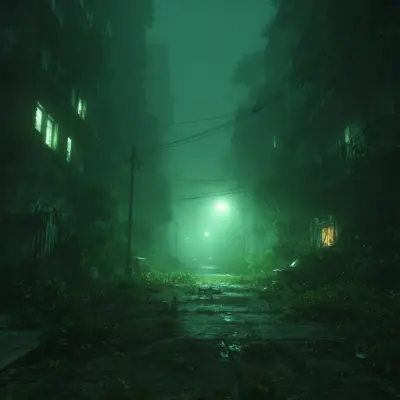
"As night fell, the Union Buildings still caught the last sun on Meintjieskop, gilding a city with nothing alive left in it. Church Square, deserted, was strewn with overturned prams and abandoned braais. And in the dark, it was hungry."
From the katana to Billy the puppet. From the battle tank to the garden gnome. Every survivor carries 3 items: choose well. Unlock new gear as you gain experience.
Meals become works of art. Team morale never drops below 60%.
Teams that still have some information about the old world last longer. Log in to activate the permanent bonus.
The crown commands respect even in the chaos. The leader radiates poise, nobody questions the orders.
▌ FROM 0 TO 1200+ · FROM "ZOMBIE FOOD" TO "GOD MODE"
Run the simulation. Discover your Survival Score. Share your team. Every decision matters. Every day brings you closer to GOD MODE, or to death.
▌ 5 transmissions to read before building your team