









▌ Arms · 118
Weapons
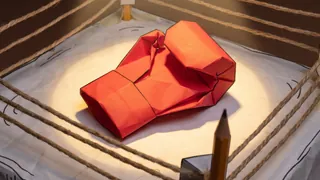
- ⚔️ChainsawLEG.
- ⚾Spiked batRARE
- 🧹BroomCOMMON
The first incident the police took seriously happened at the Valletta bus terminus in Floriana. A woman in her fifties, carrying a plastic bag from Pavi, bit a man in the neck right at the stop for route 13 to Cirkewwa. Security thought it was a domestic. When the man got up three minutes later, eyes cloudy, blood on his collar, and lunged at a teenager with a school bag, the CCTV was already dead. At 5:54, a bus stopped on Triq ir-Repubblika. The doors did not open. From inside came a sound like furniture being dragged.
On the Upper Barrakka Gardens, tourists were still taking photos of the Grand Harbour when someone filmed three people crawling across the terrace and posted it to TikTok with the caption: Zombie flash mob Valletta, mint. The video hit 70,000 views in fifteen minutes. The comments were funny. Then they stopped being funny because the author stopped replying and his last frame was the sky, then darkness.
At 6:47 PM the Police Commissioner stepped in front of cameras outside the Auberge de Castille. He said the situation was under control and that it concerned an incident involving a new synthetic drug, possibly brought in by boat from Sicily. He recommended calm. At 7:15, the Auberge went dark. At 8:02, no one answered 112 anymore. The Maltese government, which had spent decades managing to be simultaneously Mediterranean and bureaucratic, achieved a final synthesis that evening: it collapsed with elaborate slowness while filing the paperwork for its own demise.
Malta is the worst possible place for a quarantine. An island, yes, but Valletta sits on a peninsula barely six hundred metres wide, connected to Floriana by a single road. And the island itself is three hundred sixteen square kilometres with half a million people. The most densely populated country in Europe. Every town bleeds into the next without pause. Where does Birkirkara end and Msida begin? Where does Sliema stop and Gzira start? Nobody knows. There are no gaps, no firebreaks, no empty spaces. The Armed Forces tried a cordon at Marsamxett. It lasted five minutes. There was nowhere to fall back to.
Valletta fell first. Republic Street, the long spine of the city from City Gate to Fort St Elmo, became a corridor of panic. The narrow side streets, barely wide enough for two people, became traps. St John's Co-Cathedral, Caravaggio's masterpiece hanging on its wall, saw its doors forced open by a crowd that was no longer interested in art. Someone inside locked the sacristy. The Beheading of Saint John the Baptist hung in silence over an empty nave that was no longer empty.
Sliema and St Julian's went next. The promenade from Tigne Point to Spinola Bay, lined with restaurants and bars and apartment blocks, was full of people enjoying the April evening. One bite at a terrace in Balluta Bay and the panic pushed crowds into the sea. People swam. The infected did not swim. They walked into the water and kept walking. From the rooftop bars of Paceville, where the music was still playing, you could see the lights of the promenade going dark, section by section, like a power cut with teeth.
The Three Cities fought. Vittoriosa, Senglea, Cospicua, the three fingers of land across the Grand Harbour, fortified by the Knights of St John five hundred years ago against the Ottoman siege. The bastions held once before. Senglea's gardjola, the stone watchtower with its carved eye and ear, looked out over the harbour as it had for centuries. The residents barricaded the gates. They held until nine. Then someone's grandmother, bitten at the market in Bormla, turned in the kitchen while making pastizzi, and the fortress fell from within. As it always does.
In Mdina, the Silent City, there was silence. The old capital on its hilltop, surrounded by walls that had stood for a thousand years, with a population of three hundred. They closed the main gate. From the bastions they watched the island below. Rabat, the town at the foot of the walls, fell at nine thirty. The lights went out neighbourhood by neighbourhood. Mdina remained lit. The last walled city in Europe to serve its original purpose.
By ten o'clock, the darkness had crossed the island from harbour to coast. Mosta, with its miraculous dome that a German bomb once pierced without exploding, was not miraculous twice. Hamrun fell in eight minutes flat. Naxxar held for twenty because someone blocked the hill road with a truck. Gozo, visible across the channel, was dark and silent. The last ferry had sailed at seven. No one knew what was on it.
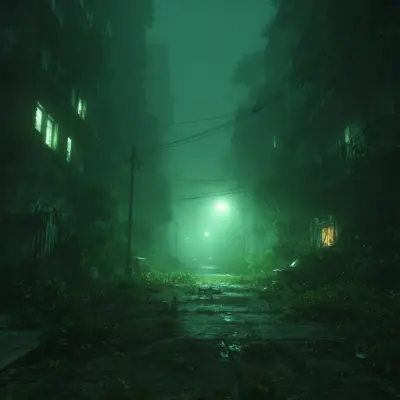
At 11 PM, only Fort St Elmo still glowed at the tip of Valletta. The star-shaped fortress, built to withstand cannon fire from an empire, lit from below by floodlights that no one had turned off. The Maltese flag still flew from its ramparts. Below it, the Grand Harbour was black and still. Not a ship moved. Not a light on the water.
Malta had always been besieged. Phoenicians, Romans, Arabs, Normans, the Ottoman Empire, Napoleon, the Luftwaffe. It had survived them all. It had earned the George Cross. But every siege in history came from outside the walls. This one started inside. The last sounds were fingernails on limestone and wet chewing that the harbour wind carried from Valletta to the Three Cities and back. Half a million mouths. Open. To bite.
Nobody could say for certain where it started. Some blamed a fisherman from Marsaxlokk who had pulled something wrong from the deep water on Monday and hadn't been right since. Others pointed at the laboratory in Mater Dei Hospital, and a third group swore it was the rabbit stew at a backstreet restaurant in Valletta, where something in the fenkata was decidedly not rabbit. It was a Tuesday, 5:38 in the evening, rush hour on an island where rush hour meant the entire country was stuck between Hamrun and Msida, and no one yet knew they had less than four hours left.
"As night fell, the Grand Master's Palace still lit St George's Square, gilding a city with nothing alive left in it. Republic Street, deserted, was strewn with overturned prams and abandoned Tallinja cards. And in the dark, it was hungry."
From the katana to Billy the puppet. From the battle tank to the garden gnome. Every survivor carries 3 items: choose well. Unlock new gear as you gain experience.
Meals become works of art. Team morale never drops below 60%.
Teams that still have some information about the old world last longer. Log in to activate the permanent bonus.
The crown commands respect even in the chaos. The leader radiates poise, nobody questions the orders.
▌ FROM 0 TO 1200+ · FROM "ZOMBIE FOOD" TO "GOD MODE"
Run the simulation. Discover your Survival Score. Share your team. Every decision matters. Every day brings you closer to GOD MODE, or to death.
▌ 5 transmissions to read before building your team