













▌ Arms · 118
Weapons
- ⚔️ChainsawLEG.
- ⚾Spiked batRARE
- 🧹BroomCOMMON
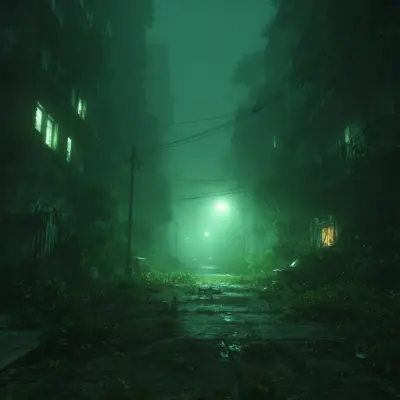
The first incident was at Mile 12 Market. A woman selling tomatoes began to convulse near the pepper section, knocking over baskets, scattering scotch bonnets across the concrete. The traders nearest to her thought it was epilepsy. One man held her down. She bit through his forearm to the bone. He screamed. She stood up wrong, her neck at an angle that spines don't permit, and walked into the crowd. Within four minutes, the pepper section was gone. Within ten, the screaming had reached the yam traders on the opposite end. The market's unofficial security, three men with machetes and yellow vests, ran toward the noise. They did not run back.
By five forty-five, phone cameras were out across Lagos. A teenager in Mushin posted the first video to TikTok. Six seconds of shaky footage showing what looked like a mob attack near the Agege Motor Road overpass. It got two hundred thousand views in three minutes. A second video, from a BRT bus window on Ikorodu Road, showed people climbing over the median barrier, running against traffic, cars honking, then stopping, then going silent. That video got four million views. Then MTN went down. Then Glo. Then Airtel. Not because of the zombies. Because twelve million people tried to make phone calls at the same time, and the infrastructure that could barely handle a normal Tuesday evening collapsed under the weight of collective terror.
The Lagos State Governor appeared on Channels TV at six forty-seven from a studio in Victoria Island. He urged calm. He referenced a gas leak. He said the police had the situation under control. By seven fifteen, the state emergency broadcast frequency was playing hold music. By eight oh two, the Governor's convoy was spotted forcing its way across the Lekki toll gate heading toward Murtala Muhammed Airport. The police commissioner's phone rang to voicemail. In a city that had survived military coups, fuel scarcity riots, and the Lekki toll gate shootings, the people of Lagos were used to being abandoned by their government. This time, though, the government had a point in running.
MOPOL checkpoints, the mobile police units stationed at every major intersection, were designed to stop cars. To check papers. To extract bribes from commercial drivers. They were not designed for what came walking out of the darkness of Mushin, Oshodi, and Ajegunle. The officers fired. The things did not stop. The officers fired again. They kept not stopping. At the Ojota checkpoint, a sergeant emptied two full magazines into a crowd that used to be commuters. The crowd absorbed the bullets the way Lagos absorbs rain, briefly, then it overflowed. The military was called. But the Third Mainland Bridge was already impassable, not from zombies but from the ten-kilometer traffic jam of people trying to flee to the mainland or flee from the mainland, nobody sure anymore which direction was safe.
Mushin fell first because Mushin was already falling. The streets too narrow for ambulances on a normal day were too narrow for escape. The face-me-I-face-you tenements, where twenty families shared a corridor and a single toilet, became corridors of transmission. One infected person in a room of eight meant eight infected people in a building of forty. Agege followed, the alleys behind Pen Cinema where even okada riders knew to accelerate, where the darkness between zinc rooftops was total. Ajegunle went next, Jungle City earning its name for the last time, the waterlogged streets slowing everything except the dead, who did not care about ankle-deep sewage.
On the Island, it was different. Victoria Island fell with its lights on. The generators that kept the mansions bright when NEPA failed, they kept running as the dead walked up Banana Island's private bridge. The security guards at the gate, the ones trained to stop uninvited guests, they tried. The electric fence worked until the bodies piled high enough to short-circuit it. Ikoyi fell house by house, compound by compound, each gated wall buying minutes, not hours. The rich had backup generators, panic rooms, satellite phones. None of these things stopped teeth.
Surulere held longer than anyone expected. The neighborhood that gave Nigeria its musicians, its actors, its identity, organized the way it always had, block by block. The area boys, usually feared, became the first line of defense with their machetes and broken bottles. The women of Adeniran Ogunsanya Street barricaded with market tables and burning tires, the same tactic that had blocked police raids for decades. National Stadium became a rally point, its floodlights powered by the stadium's own generator, drawing thousands of survivors through the gates. For two hours, it worked. Then the lights attracted more than survivors.
The churches filled. Deeper Life on Gbagada Expressway. Redeemed Christian Church's camp on the Lagos-Ibadan Expressway where Pastor Adeboye had once gathered a million worshippers. They filled because Lagosians had been told all their lives that the church was a sanctuary, that faith was a shield. The singing started, desperate worship, voices raised against the sound of breaking glass. Christ Embassy's headquarters in Lekki held a final service. The congregation sang in tongues. The doors, designed to welcome, were not designed to hold.
The mosques were the same. Lagos Central Mosque's ancient walls on Lagos Island, where Friday prayers regularly drew ten thousand, became a refuge for the desperate. The imam organized the men at the doors. They held with prayer mats and wooden beams. The call to Isha prayer went out at seven thirty-two, the muezzin's voice carrying over a city that was no longer listening to anything but screams. It was the last azan Lagos would hear.
At eleven that night, the Third Mainland Bridge was visible from both shorelines, a twelve-kilometer ribbon of headlights frozen in place, car doors open, engines still running. Below, Lagos Lagoon reflected the orange glow of fires in Makoko, the floating slum burning because someone had tried to stop the spread with kerosene. It did not stop the spread. Makoko sank and burned and died the way it had always lived, ignored by the city around it.
By midnight, the skyline of Lagos Island still glittered. The banks, the corporate towers, the neon signs selling Malta Guinness and GLO SIMs, they blazed on because diesel generators do not know the world has ended. From the top of the Nigerian Law School building, if anyone had been alive to look, they would have seen a city of twenty-three million reduced to light without meaning. The go-slow to end all go-slows. Every road full. Every car stopped. Every door open.
Lagos, the city that never slept, the city that had survived everything, finally went quiet. Not silent. Quiet. The difference is teeth. Twenty-three million mouths. Open. To bite.
Nobody could say for certain where it started. Some blamed the bushmeat, the strange cuts of antelope sold at the far end of Balogun Market where the fluorescent lights never worked and the meat sat uncovered since dawn. Others pointed to the container ship from Douala that had docked at Apapa Port three days earlier, its crew missing, its cargo manifest incomplete, a smell leaking from Hold 4 that the customs officers dismissed as rotten fish. A few whispered about the body that washed up on Bar Beach the previous Friday, bloated beyond recognition, which the police had covered with a tarp and forgotten. It was a Tuesday. Five seventeen in the afternoon. The hour when Eko Atlantic's glass towers emptied their workers onto Ahmadu Bello Way, when the danfos on Third Mainland Bridge were packed so tight that passengers breathed each other's sweat, when Oshodi interchange became a single organism of twelve million bodies trying to get home.
"As night fell, Aso Rock still loomed in silhouette behind the city, gilding a city with nothing alive left in it. Constitution Avenue, deserted, was strewn with overturned keke NAPEP and abandoned Cowrie cards. And in the dark, it was hungry."
From the katana to Billy the puppet. From the battle tank to the garden gnome. Every survivor carries 3 items: choose well. Unlock new gear as you gain experience.
Meals become works of art. Team morale never drops below 60%.
Teams that still have some information about the old world last longer. Log in to activate the permanent bonus.
The crown commands respect even in the chaos. The leader radiates poise, nobody questions the orders.
▌ FROM 0 TO 1200+ · FROM "ZOMBIE FOOD" TO "GOD MODE"
Run the simulation. Discover your Survival Score. Share your team. Every decision matters. Every day brings you closer to GOD MODE, or to death.
▌ 5 transmissions to read before building your team