










▌ Arms · 118
Weapons
- ⚔️ChainsawLEG.
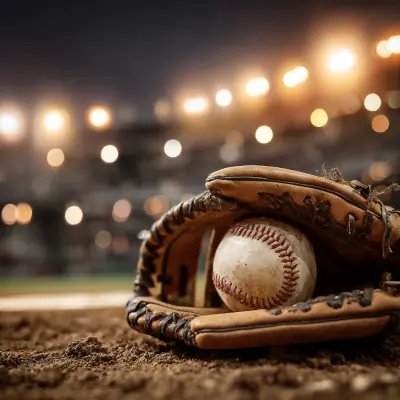
- ⚾Spiked batRARE
- 🧹BroomCOMMON
The first cases appeared at Berri-UQAM. Commuters stumbling off the Orange line, grey-faced, collapsing on the platform before pulling themselves back up with a mechanical slowness, glassy eyes, slack jaw. The STM guards thought it was hypothermia. In Montreal in March, that tracks. Then the biting started.
Within two hours, the Montreal Metro, four lines, sixty-eight stations, that system the city built in 1966 and decorated with public art like an underground museum because this is Montreal and even the subway has to be cultural, became a slaughterhouse. The Green line, the one that follows Sainte-Catherine from Angrignon to Honoré-Beaugrand, turned into a death trap: packed trains kept rolling, doors jammed, screams fading car by car, station by station. At Lionel-Groulx, where the Green and Orange lines cross, thousands were crushed between turnstiles and the grey tide rising from the platforms.
Above ground, Montreal didn't understand right away. On the terrasses of the Plateau, people were still drinking craft beer and arguing about language politics when the first infected climbed out of the metro vents on Saint-Laurent Boulevard, stumbling into the evening cold, past the bagel shops and the smoked meat delis and the strip clubs, because Saint-Laurent has always been a street where everything happens at once. People filmed. Of course they filmed. The video of a guy in a Canadiens jersey biting a doorman outside a club on Crescent Street went viral, thirty-three million views before the internet collapsed. The Habs hadn't drawn that kind of attention since '93.
The Prime Minister spoke from Rideau Cottage in Ottawa at 6:47 PM. By 7:15 PM, Ottawa was dealing with its own problems. By 8:02 PM, the RCMP switchboard in Montreal went dead. Canada, the country that prides itself on being polite, organized, and boring in the best possible way, discovered that there is no protocol for this. Not in English. Not in French. Not in any of the languages spoken in this country that has always believed that if you just talk long enough, everything works out.
The army tried to hold the bridges. Montreal is an island, and an island should be easy to isolate. The Champlain Bridge, the Jacques-Cartier Bridge, the tunnels. Block them and you block the city. But the island has sixty-five kilometres of shoreline and the St. Lawrence was frozen solid in March. The things walked across the ice. They didn't need bridges. They just walked. Slowly, steadily, across the ice that connects Montreal to the South Shore, the same ice that the habitants used to cross three hundred years ago. History repeating itself in the worst possible way.
The Plateau fell first. In the walk-ups on Saint-Denis where students and artists had been paying too much rent for too little space, the narrow staircases became traps. The iconic outdoor staircases, those wrought-iron spirals that define the neighbourhood and that look beautiful in photographs and terrifying in an ice storm, were worse. You cannot run down a frozen spiral staircase in March. Not from anything. In Mile End, the bagel shops on Fairmount and Saint-Viateur closed their ovens for the first time since they opened. The wood-fired smell that had floated over the neighbourhood for decades was replaced by something else.
In Hochelaga, the working-class neighbourhood that gentrification forgot, people fought back with hockey sticks and snow shovels. They held their blocks for six hours. In Verdun, along the canal, in Saint-Henri where Leonard Cohen grew up and wrote about the beauty of broken things, the broken things weren't beautiful anymore.
At the Bell Centre, twenty-one thousand two hundred and seventy-three empty seats. The ice was still perfect. The Canadiens logo at centre ice still glowed. This building had seen everything, from Maurice Richard's rage to Patrick Roy's last game to twenty-seven years without a Cup. It had never seen silence.
From the top of Mont Royal, from the lookout where you can see the whole city spread out below, the cross still lit, Montreal was going dark. The Olympic Stadium, that concrete mistake from 1976 whose roof never worked properly, stood in the east like a giant mouth. Fitting.
Montreal. La ville aux cent clochers. The city of Leonard Cohen and Mordecai Richler and Michel Tremblay. The city that speaks two languages and understands itself in neither.
Tonight it spoke no language at all.
And in the dark, between the duplexes and the high-rises, between the poutine joints and the churches, between the French and the English and the hundred other languages that make this city what it is, two million mouths were opening. Not to talk. Not to argue about sovereignty. Not to order a steamé all dressed. To bite.
Nobody could say for certain where it started. Some blamed a dead rat in the tunnels beneath Berri-UQAM, that station where three metro lines converge under downtown Montreal like veins feeding a cold heart. Others pointed to an unmarked container at the Port of Montreal that Canada Border Services never opened because the officer was on leave and the replacement was stuck in traffic on the Décarie. A few whispered about a lab at the Institut Armand-Frappier in Laval whose emergency frequency went silent on the night of March 12th and never came back. What everyone agrees on is that it happened on a Tuesday, right at rush hour. Five thirty PM, minus fifteen outside, and the whole city underground where it was warm. Where it was close. Where there was nowhere to run.
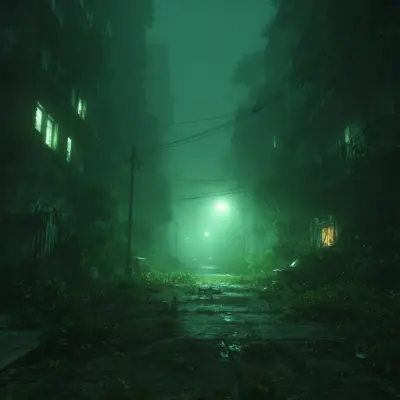
"As night fell, the Peace Tower still caught the last sun above the Hill, gilding a city with nothing alive left in it. Sparks Street, deserted, was strewn with overturned Capital Bike share bikes and abandoned Presto cards. And in the dark, it was hungry."
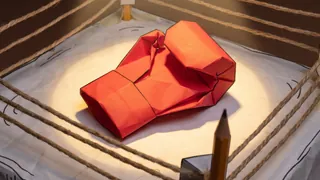
From the katana to Billy the puppet. From the battle tank to the garden gnome. Every survivor carries 3 items: choose well. Unlock new gear as you gain experience.
Meals become works of art. Team morale never drops below 60%.
Teams that still have some information about the old world last longer. Log in to activate the permanent bonus.
The crown commands respect even in the chaos. The leader radiates poise, nobody questions the orders.
▌ FROM 0 TO 1200+ · FROM "ZOMBIE FOOD" TO "GOD MODE"
Run the simulation. Discover your Survival Score. Share your team. Every decision matters. Every day brings you closer to GOD MODE, or to death.
▌ 5 transmissions to read before building your team